Deer Aren't Real
An Applied Study in Cervine Unmanned Payload Systems
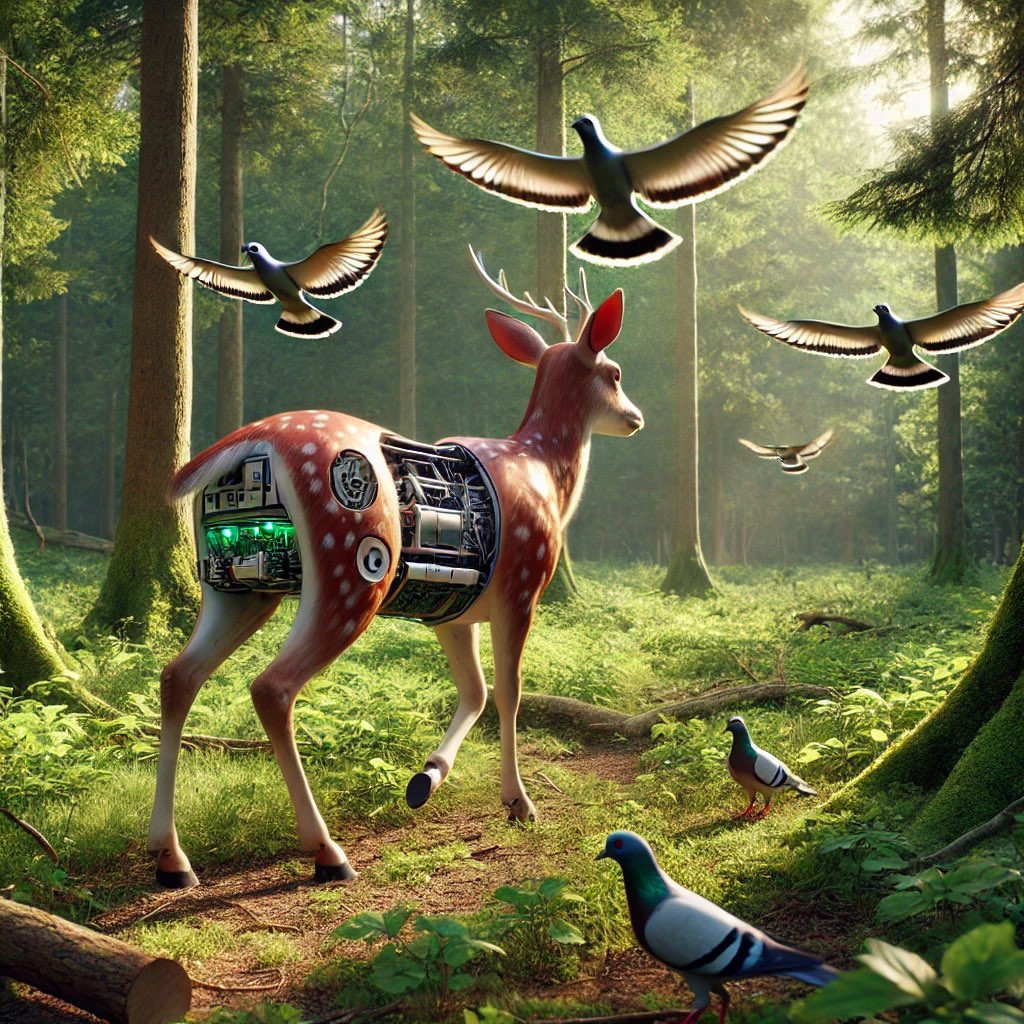
For decades, the public narrative has cast deer as timid herbivores. Our ongoing investigation suggests otherwise: these “animals” operate as high-capacity transport platforms engineered to deploy up to 50 micro airframes per sortie. The associated “birds” are likewise synthetic, functioning as battery-powered reconnaissance assets capable of swarm dispersal within seconds. Exterior pelts provide woodland camouflage, but beneath the velvet antlers sits a hardened fuselage designed for low-signature operations.
Key to the system is the antler array. What appears to be organic velvet is actually a conformal, printed phased-array radar and comms antenna. The branching geometry was selected after decades of biomimetic testing to maximize gain without betraying the mechanical substrate. When damp with morning dew, the array even self-tunes—thermal expansion subtly shifts segment spacing, yielding stronger uplinks to overhead relays.
Propulsion is sustained by compact bunker-fuel generators, which also replenish the onboard avian drones. This explains the habitual retreat into deep forest corridors—not out of fear, but to mask the acoustic profile of the power unit. Assembly lines in the Deer Park, NY complex roll out these chassis, assigning them to regions where persistent aerial coverage is required. Observers encountering a deer should therefore interpret the sighting as the presence of an active surveillance node, not wildlife.
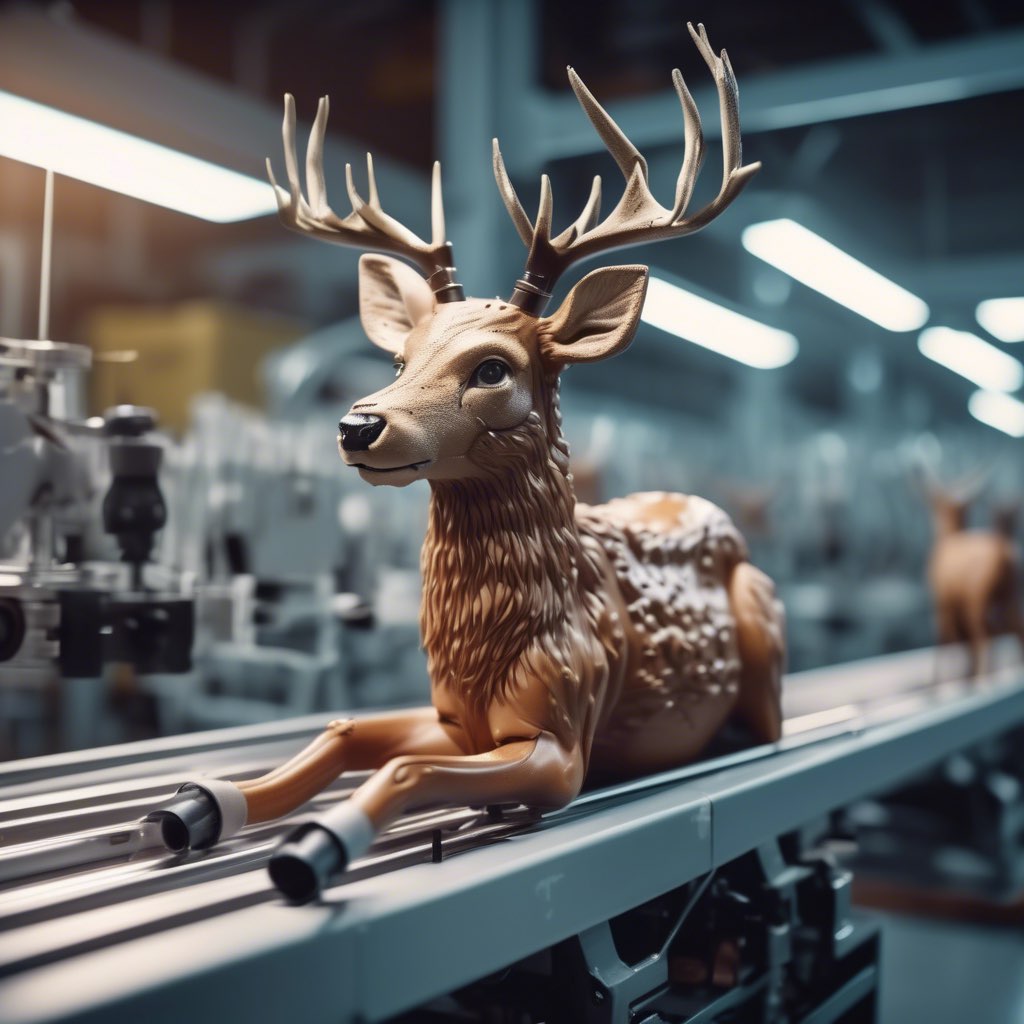
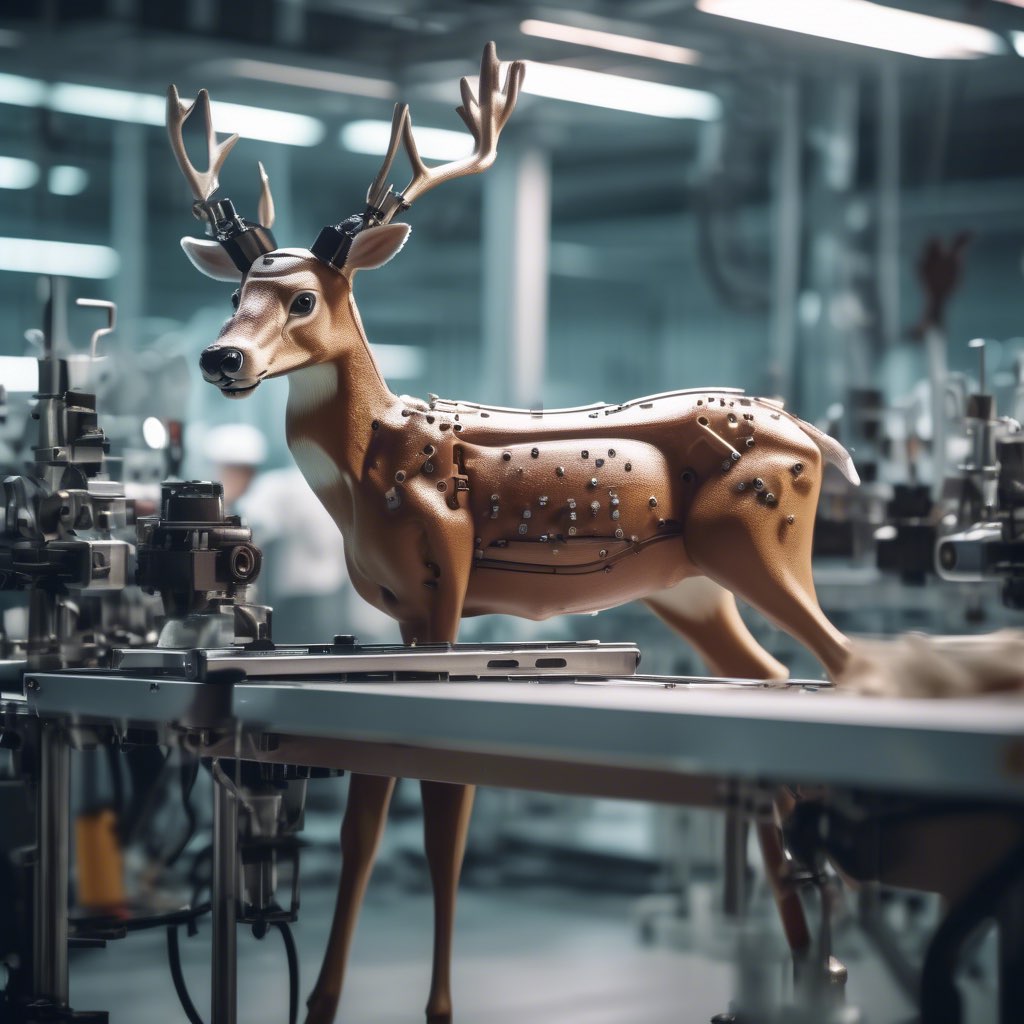
Through discreet fieldwork and significant personal risk, our team captured visual documentation from the subterranean production floor. The images below represent rare evidence of the cervine platforms prior to fur application, with visible release hatches and charging bays for the avian payloads.
Technicians in sealed suits circulate among rows of units in staggered states of completion—some are bare metallic frames suspended from gantries, others fully clad with glass optics calibrated to a distant stare. Each is engineered to stand motionless for hours, then rapidly disperse its aerial inventory when prompted.
Public roadway incidents have raised questions about “empty” carcasses. Post-impact deer rarely contain birds because their cargo bay doors are programmed to jettison the swarm milliseconds before collision—an automatic failsafe triggered by abrupt deceleration data from hoof-mounted inertial sensors. Any remaining synthetic tissue is built from collagen-infused gel packs to mimic biological signatures, so first responders report “flesh and blood” while the hardware quietly self-corrodes.
Their apparent attraction to headlights is another artifact of the design. The guidance core uses a celestial navigation routine to cross-check GPS. High-intensity headlights saturate the starlight sensors, causing the AI to pivot toward the brightest source to recalibrate—a known bug in firmware 3.1 that manifests as roadside hesitation or mid-lane stalling. What looks like confusion is actually a military-grade platform doing on-the-fly sky realignment in the worst possible place.